
E-commerce data scraping is the automated collection of product data from online stores and marketplaces. That covers prices, discounts, stock status, reviews, ratings and seller details, saved in a format your team can actually use. A scraper visits product pages the way a shopper does and records what it sees, across thousands of listings, on a set schedule.
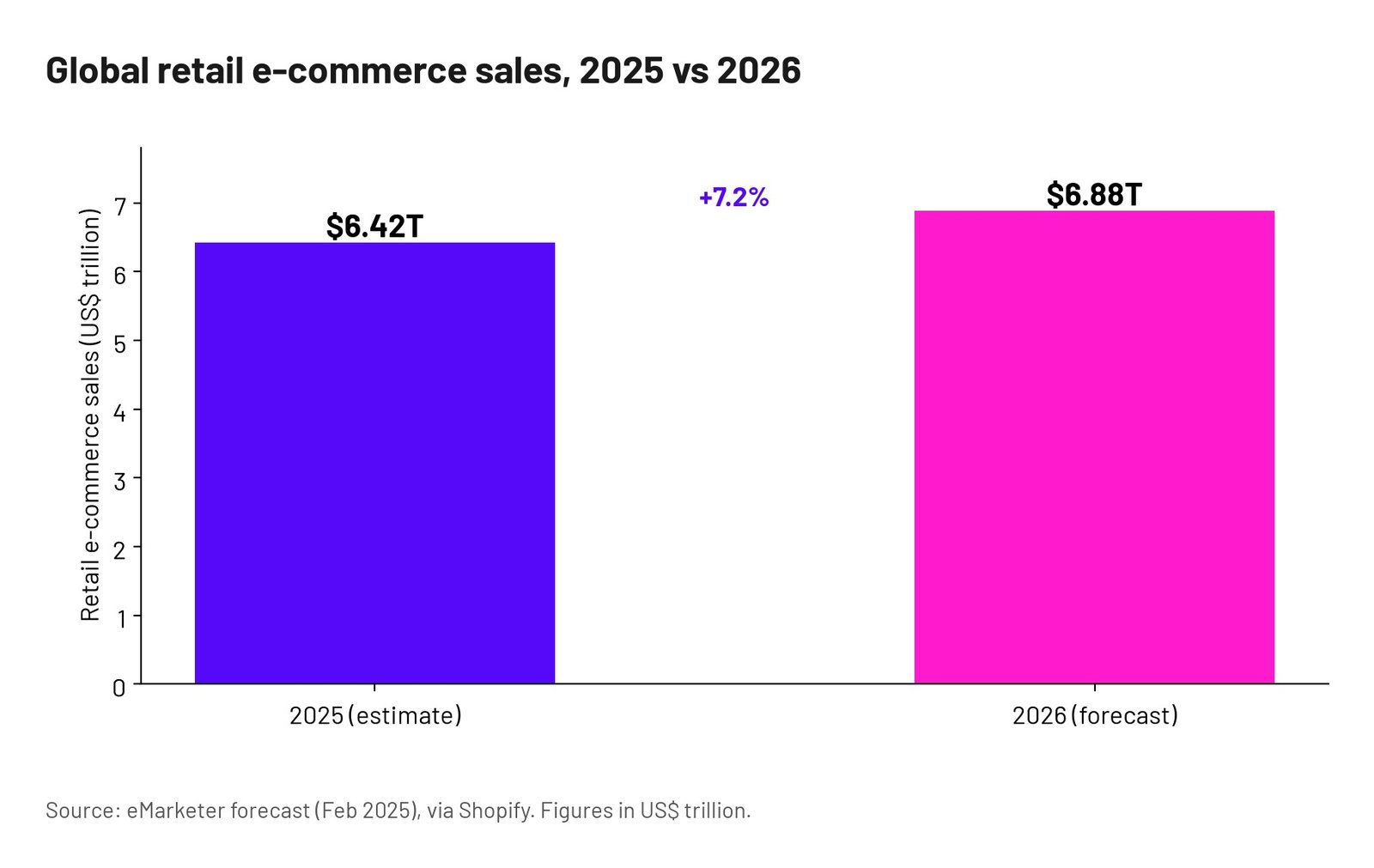
The scale explains why it matters. Global e-commerce sales reached an estimated $6.42 trillion in 2025 and are projected to hit $6.88 trillion in 2026, per Shopify and eMarketer data. In a market that big, nobody can track competitor prices by hand.
That is a 7.2% year-on-year rise, and e-commerce is expected to account for 21.1% of all retail sales worldwide in 2026, based on eMarketer’s February 2025 forecast.
What Is E-commerce Data Scraping, Exactly?
General web scraping pulls any data from any site. E-commerce scraping is narrower. It targets product pages, category pages, search results and seller pages on stores like Amazon, Flipkart, Walmart or a competitor’s own website.
Here’s what it usually collects:
Data point | What it tells you |
|---|---|
Price and discount | Where you stand against competitors today |
Stock status | When a rival runs out, which is your chance to win the sale |
Reviews and ratings | What buyers love or hate about a product |
Product titles and specs | How competitors describe and position products |
Seller names | Who is selling your brand, including unauthorized sellers |
Search rank on marketplaces | Which products show up first for a keyword |
Why Does E-commerce Data Scraping Matter in 2026?
The problem is speed. Online prices change all the time, and shoppers notice.
Look at Amazon. The price of any given item on Amazon.com changes every 10 minutes on average, according to a 2019 Axios report. If you check competitor prices once a week in a spreadsheet, the data is old before you finish reading it.
The figure itself goes back to a 2018 Business Insider excerpt from the book Swipe to Unlock, which put Amazon’s price changes at 2.5 million a day. Treat it as a directional benchmark rather than a current measurement.
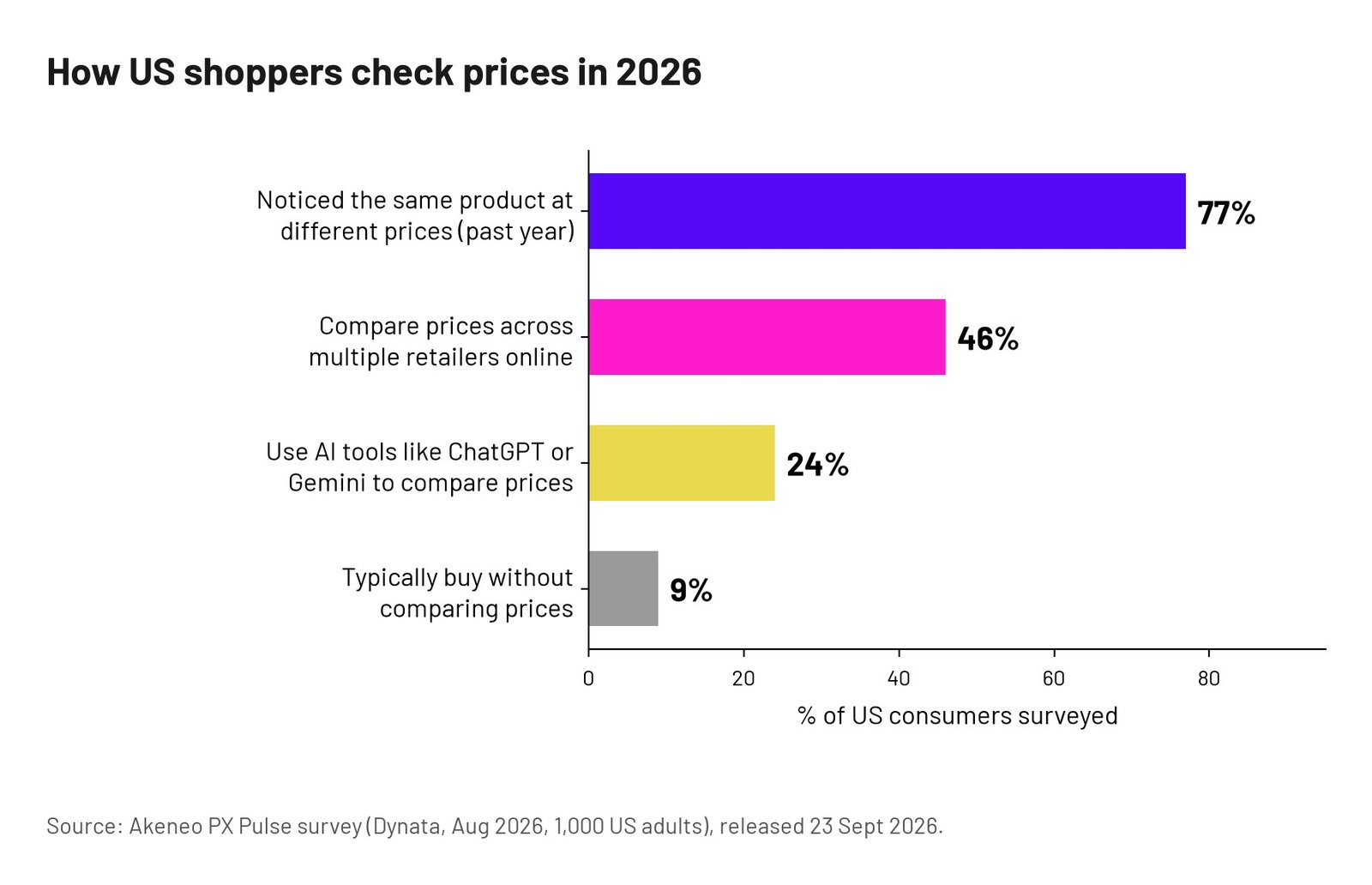
Shoppers are checking too. A September 2026 Akeneo survey found that 46% compare prices across multiple retailers when shopping online, while only 9% buy without comparing prices. The same survey found that 77% have spotted price differences for the same product across retailers or platforms.
The survey was conducted by Dynata in August 2026 among 1,000 US adults, so read it as a US benchmark.
Comparison is moving into AI tools as well. 24% of consumers already use tools like ChatGPT or Google Gemini to compare prices or deals. These tools surface price gaps in seconds, so a buyer who sees a gap leaves.
The money behind price tracking is growing too. The price monitoring software market is projected at about $2.17 billion in 2026, reaching nearly $5.09 billion by 2034.
India is on the same curve. Bain & Company’s How India Shops Online 2025 report, written in collaboration with Flipkart, puts India’s e-retail market at about $60 billion in gross merchandise value (GMV) in 2024. It projects growth of more than 18% a year (2024–2030) to an estimated $170–190 billion by 2030. For brands selling on Flipkart and Amazon.in, more sellers and listings mean more prices to track.
How Does E-commerce Data Scraping Work?
Most projects follow five steps:
- Discover products. A crawler finds the right product URLs through category pages, search results or sitemaps.
- Match products. This is the hard part in e-commerce. The same phone can carry a different title on every site. Matching links listings for one item by model number, EAN or GTIN (unique product barcodes), or by comparing titles and images.
- Extract data. The scraper reads the page code and pulls price, stock, rating and other fields.
- Refresh on a schedule. Data is re-scraped daily, hourly or more often, depending on how fast your category moves.
- Deliver. Clean data goes to a dashboard, Google Sheet, CSV file or an API feed connected to your pricing tool.
If the matching is bad, everything after it is bad too. Comparing your 128GB model with a rival’s 256GB model gives you a wrong price gap and a wrong decision.
What Can Businesses Do With Scraped E-commerce Data?
Use case | How it works | Best for |
|---|---|---|
Dynamic pricing | Adjust prices based on competitor moves and stock | D2C brands, marketplace sellers |
Catch sellers going below your minimum advertised price | Brands and manufacturers | |
Assortment gaps | Find products competitors sell that you don’t | Retailers, category managers |
Review mining | Spot repeat complaints and feature requests | Product and marketing teams |
Stock tracking | Push ads when a competitor goes out of stock | Performance marketers |
Find who is reselling your brand | Brands on Amazon and Flipkart | |
Marketplace SEO | Track keyword rankings and competitor listing copy | E-commerce SEO teams |
Why Is E-commerce Scraping Getting Harder?
Retail sites are among the most protected sites on the internet, and they treat many bots as threats.
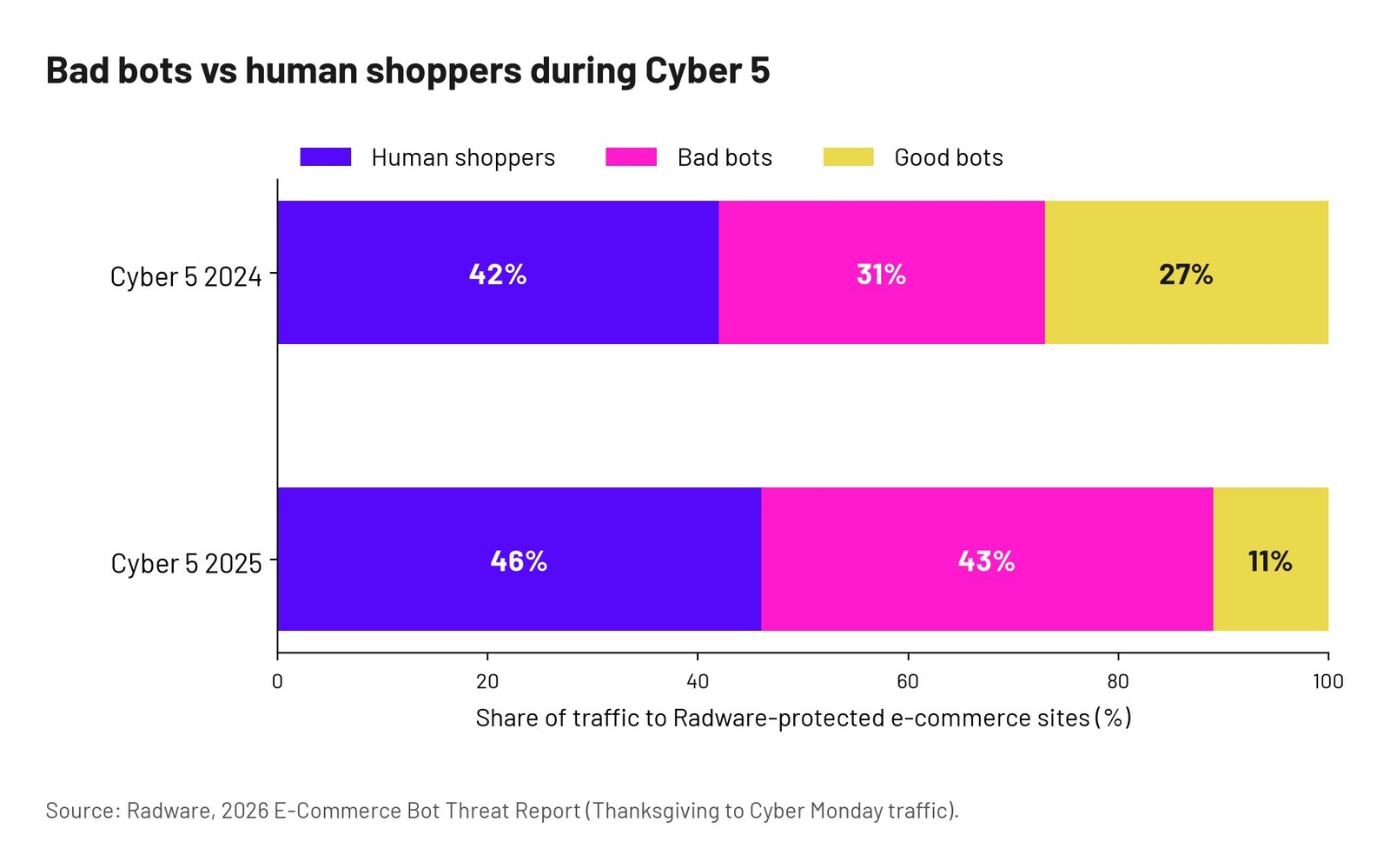
Thales’ 2026 Bad Bot Report found that retail is the sector AI bots target most. Retail drew 20% of AI-driven bot attacks in 2025, more than any other industry. Radware’s 2026 e-commerce report shows how big the volume is. During the 2025 Cyber 5 (Thanksgiving through Cyber Monday), bad bots made up 43% of traffic to the retailers it protects, against 46% from human shoppers. At one large multinational retailer alone, price scraping climbed to 5 billion detected attacks.
A year earlier, bad bots made up 31% of that traffic. Keep in mind that both reports come from bot-protection vendors, which count price scraping as an attack.
So what does this mean for you? Big retailers now invest heavily in blocking scrapers. A basic in-house script that worked six months ago can start returning CAPTCHAs, blank pages or fake prices without warning. That maintenance burden is the main reason brands hire e-commerce data scraping services instead of building their own.
Is E-commerce Data Scraping Legal?
Collecting public product data such as prices and specs is generally considered lower risk, because prices are facts and anyone can see them without logging in. US courts have backed scraping of public data. In Meta v. Bright Data (January 2024), the court found that Bright Data did not breach any contract with Meta by scraping public data while logged off.
A month later, Meta dropped its remaining claim and waived its right to appeal that ruling.
Risk goes up when you cross certain lines. This is general information, not legal advice, so check with a lawyer for your market. Four rules keep most projects safe:
- Scrape public pages only, never pages behind a seller or buyer login.
- Skip personal data such as reviewer names or profiles, especially under GDPR and India’s DPDP Act 2023.
- Don’t copy product images or full descriptions for your own listings. Facts are fine, but creative content belongs to whoever made it.
- Keep request rates low so you never slow down the target site.
For India, Section 3(c)(ii) of the DPDP Act, 2023 excludes personal data that the person it relates to has made publicly available (or that someone is legally required to publish). That is not a blanket pass for scraping reviewer or seller profiles. The government notified the DPDP Rules on 14 November 2025, with an 18-month phased compliance timeline, so build privacy checks into scraping projects now.
Should You Build In-House or Hire E-commerce Data Scraping Services?
Factor | In-house | E-commerce data scraping services |
|---|---|---|
Setup time | Slower, since everything is built from scratch | Faster, since scrapers for major marketplaces often already exist |
Product matching | You build and tune it yourself | Usually included, with accuracy checks |
Anti-bot handling | Your team manages proxies and blocks | Handled by the provider |
Location-level prices | Hard to set up | Often supported by city or pincode |
Best for | A few stable competitor sites | Many marketplaces, large catalogues, daily feeds |
What Should You Look For in E-commerce Data Scraping Services?
- Product matching accuracy, with a sample report before you sign
- Coverage of the marketplaces you care about, including regional ones
- Location-level data, since many platforms show different prices or stock by pincode
- A refresh rate that suits your category, from daily to near real-time
- Delivery into the tools you use: Sheets, CSV, API or your repricing software
- A clear fix timeline when a site changes its layout
- A written policy on public data and personal data
FAQs
Is e-commerce data scraping the same as using a marketplace API?
No. Marketplace APIs mostly give you data about your own listings. Scraping collects public data about competitors, which those APIs don’t share.
How often should I scrape competitor prices?
That depends on your category. Fast-moving categories like electronics may need several updates a day. Slower ones like furniture can work with daily or weekly checks.
Can small D2C brands use e-commerce scraping?
Yes. Many services price by number of products or sites tracked, so you can start with your top 50 SKUs and expand later.
Does India’s DPDP Act stop me from tracking competitor prices?
Prices, specs and stock levels are product facts, not personal data, so price tracking is not the main concern under the DPDP Act. The Act and its Rules, notified in November 2025, matter when a scraper also collects personal details such as reviewer names or individual seller contacts. This is general information, not legal advice.
Final Word
Your competitors’ prices, stock and reviews are already public. The brands that win are simply the ones that check that data more often.
Leave A Comment