
Web scraping is the automated process of pulling data from websites and saving it in a structured format, like a spreadsheet or a database. A person would copy prices or reviews one page at a time. A scraper does the same job across thousands of pages in minutes.
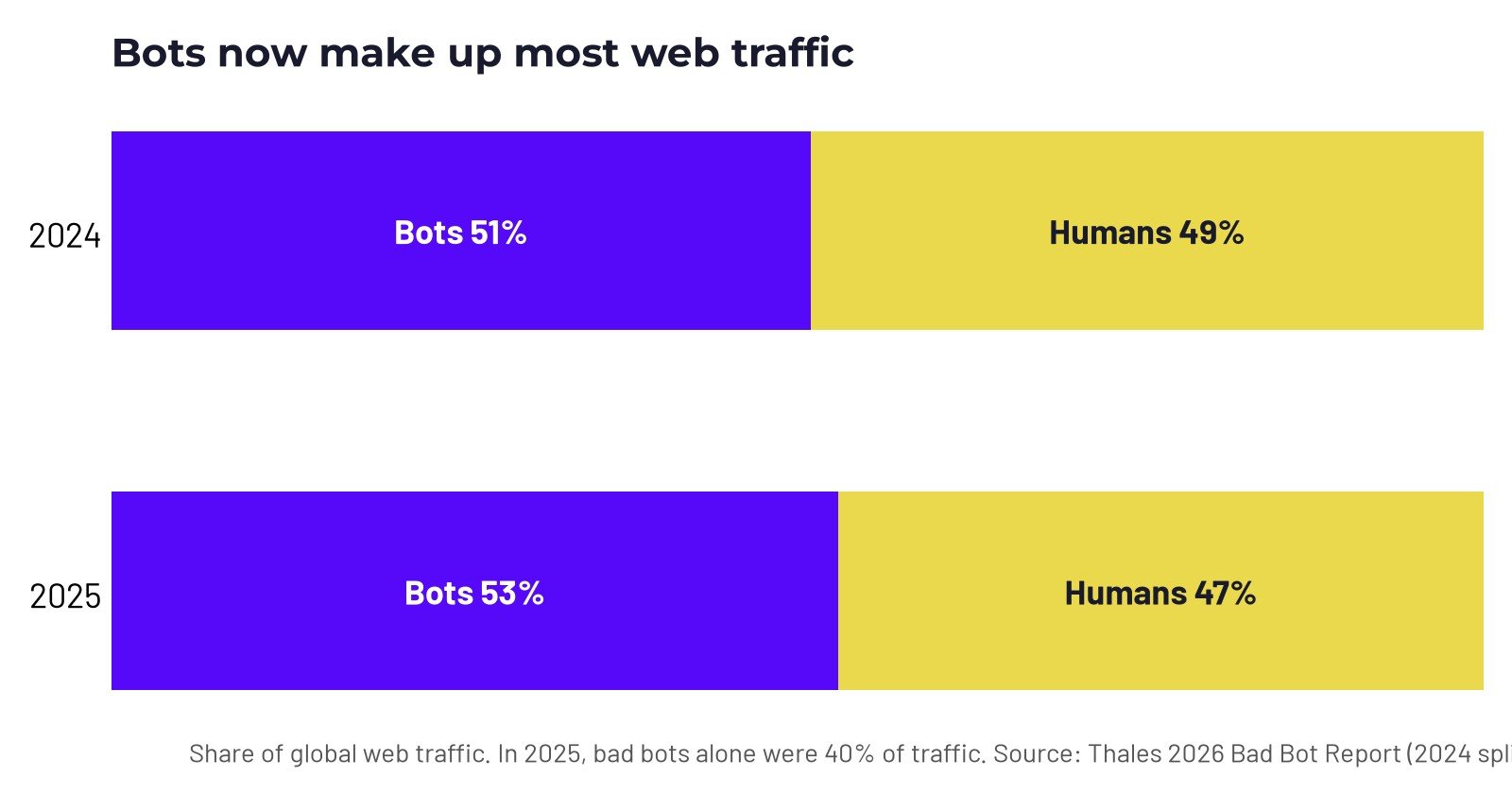
In 2026 this is no longer a developer side project. Thales' 2026 Bad Bot Report found that bots made up 53% of web traffic in 2025, and a big share of that automation is data collection. If your competitors track prices, reviews and leads at that scale while your team still copies them by hand, their data is fresher than yours.
Humans now make up only 47% of web traffic, down from 49% a year earlier, according to IT Brief's summary of the Thales findings.
This guide covers what web scraping is, how it works, the legal side, and when web scraping services make more sense than building your own.
What Is Web Scraping, in Plain English?
Every webpage is built from HTML. That is the code your browser reads to show text, images and prices. A web scraper reads the same code, finds the parts you care about (say, product name and price), and saves them in rows and columns.
Two terms come up a lot:
- Crawler: a bot that discovers pages by following links. Google's crawler does this to index the web.
- Scraper: a bot that pulls specific data out of those pages.
Most business projects use both. The crawler finds the pages and the scraper extracts the data.
Site owners can tell crawlers which pages to skip with a small file called robots.txt. Google's robots.txt guide says the file is used mainly to avoid overloading a site with requests.
How Does Web Scraping Work?
A typical scraping job runs in four steps:
- Request. The scraper visits a URL, the same way your browser does.
- Render. Some sites load content with JavaScript after the page opens. For these, a headless browser loads the full page. A headless browser is a normal browser with no screen, controlled by code.
- Extract. The scraper picks out the target fields using selectors. Selectors are rules that point to one exact spot in the page code.
- Store and clean. Data goes into CSV, Excel, a database or an API feed. Duplicates and format errors get removed.
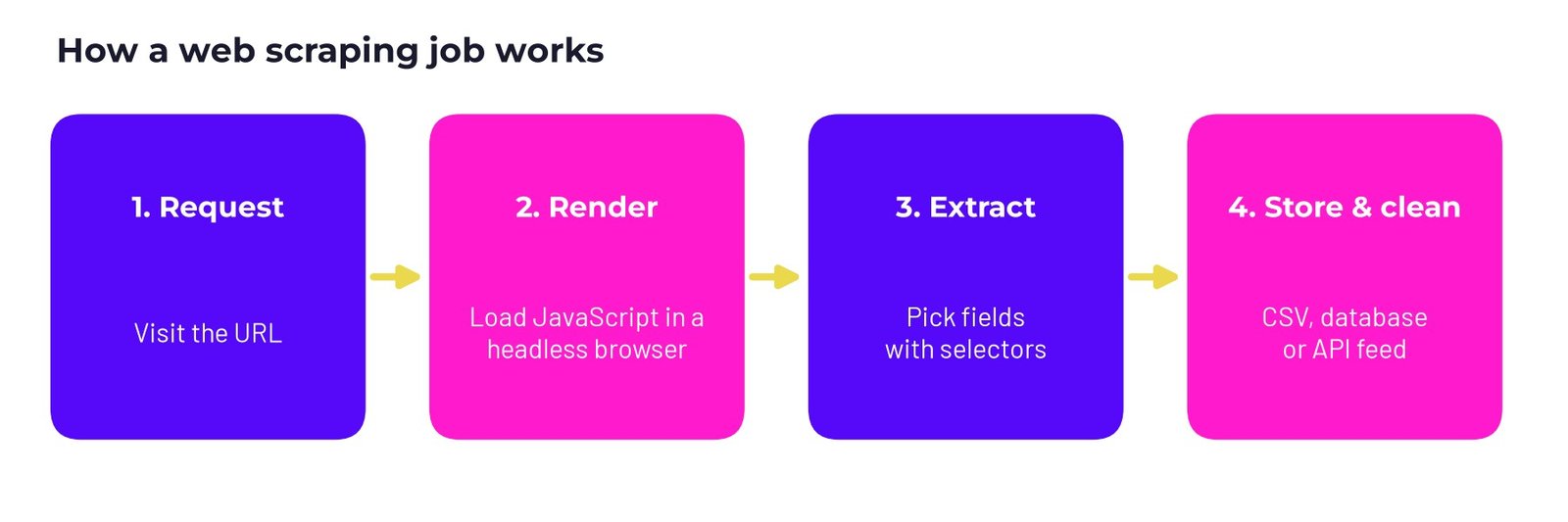
Figure 2: The four steps of a typical scraping job. Diagram by Botpresso.
Step 3 is rarely the hard part. The hard part is everything around it: proxies to avoid IP blocks, CAPTCHA handling, and fixing the scraper every time the target site changes its layout.
Bot detection keeps getting smarter too. Thales reports that 41% of bot attacks now use Chrome to look like normal visitors, so a familiar browser name no longer proves a visitor is human. Mordor Intelligence notes that tougher bot protection on retail sites is pushing demand for more resilient scrapers.
How Big Is the Web Scraping Market in 2026?
Research firms give different numbers, but every major estimate points up.
Source | Estimate | Growth rate |
|---|---|---|
Mordor Intelligence | $1.34 billion in 2025 ($1.56 billion in 2026), reaching $3.49 billion by 2031 | 17.39% CAGR |
$0.99 billion in 2025 to $1.17 billion in 2026 | 18.5% CAGR (2025-2026); 18.2% CAGR to $2.28B by 2030 | |
Neudata (related: alternative data spend) | $2.8 billion spent by investment managers (hedge funds and money managers) in 2025 | 17% jump from the year before |
CAGR means compound annual growth rate, the average yearly growth over the period.
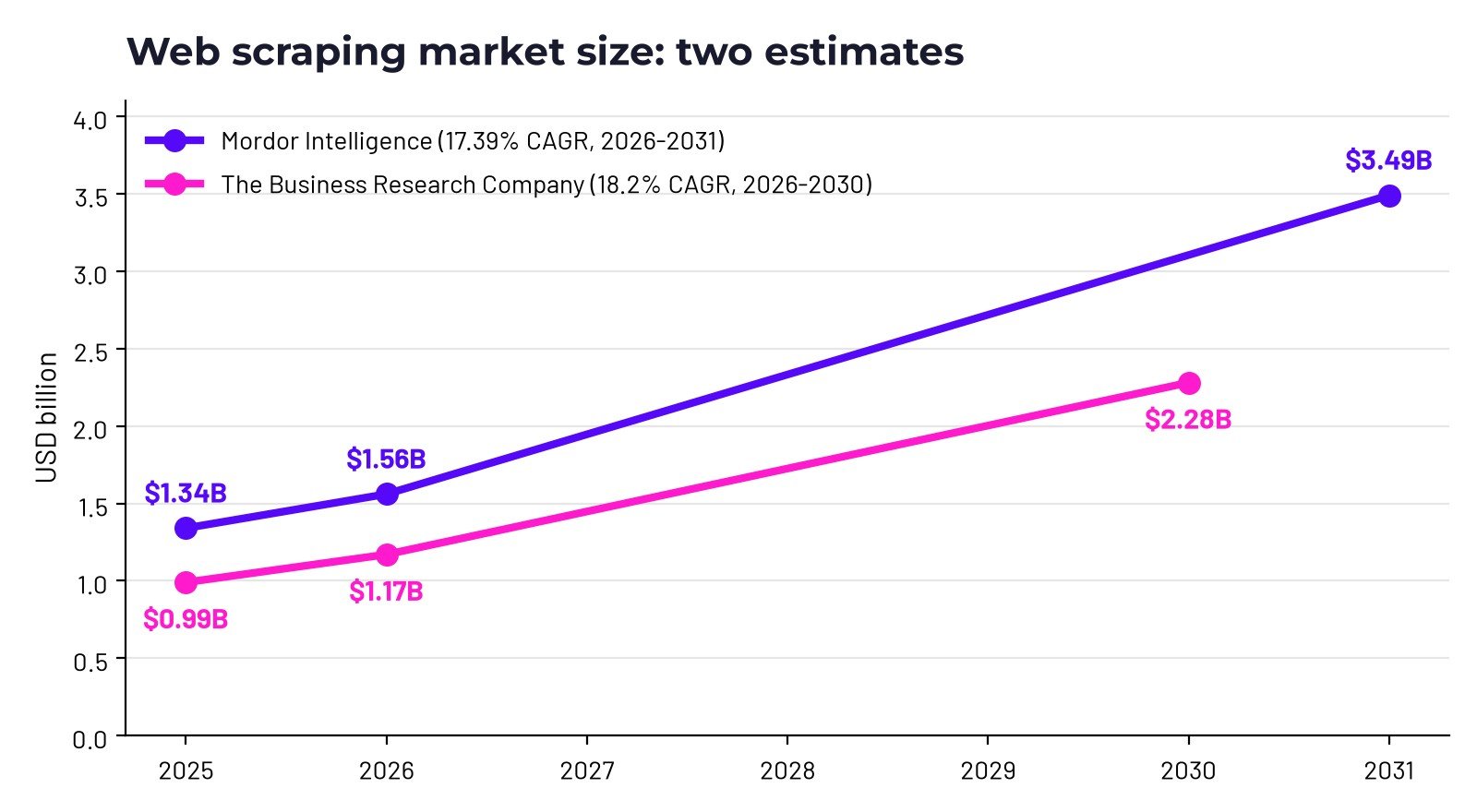
Figure 3: Web scraping market size estimates. Sources: Mordor Intelligence and The Business Research Company (via ResearchAndMarkets).
The Business Research Company expects the market to reach $2.28 billion by 2030. Mordor Intelligence adds two useful details. Software held 58.35% of revenue in 2025, but services are growing faster, at an 18.62% CAGR, as buyers outsource compliance checks, proxy upkeep and anti-bot tuning. The same Mordor Intelligence report says 81% of US retailers now use automated price scraping, up from 34% in 2020.
The finance row matters. Alternative data is any data outside company filings that investors use to predict performance. Neudata's analysis found that web-scraped and transactional datasets still account for the largest share of alternative data spending. Wall Street already treats scraped web data as a serious input.
Neudata tracked 2,805 datasets in 2025, up from 2,215 in 2024. It estimates the alternative data market could reach about $23.1 billion by 2030 if current trends hold.
What Do Businesses Use Web Scraping For?
Use case | What gets scraped | Who uses it |
|---|---|---|
Competitor prices, discounts, stock status | ||
Lead generation | Public business directories and company pages | B2B sales teams, agencies |
Market research | Reviews, ratings, new product launches | Brands, product teams |
SEO and content | Search results, competitor pages, keyword data | Marketing teams, SEO agencies |
Investment research | Job postings, pricing changes, app reviews | Hedge funds, analysts |
Real estate | Listings, rent and price movements | Brokers, property platforms |
Public text, product catalogues | AI companies, data teams |
AI is now one of the biggest drivers. Mordor Intelligence reports that 65% of enterprises used web scraping to feed AI and machine-learning projects in 2024.
The common thread is simple. Decisions get made on this week's data instead of last quarter's report.
Is Web Scraping Legal?
Scraping publicly available data is generally legal in the US. But how you scrape, and what you scrape, decide your risk. This section is general information, not legal advice, so check your specific case with a lawyer.
Three cases show where the line sits:
- hiQ Labs v. LinkedIn (2019): the Ninth Circuit found that the CFAA does not bar anyone from scraping publicly accessible data. The CFAA is the main US anti-hacking law. In April 2022, after the Supreme Court sent the case back, the court reaffirmed that view in its opinion, as TechSpot reported. The case did not end cleanly for hiQ, though. LinkedIn later obtained a permanent injunction against hiQ, so terms of service still matter. That December 2022 outcome rested on contract claims, including hiQ's use of fake accounts to collect logged-in data, according to Farella Braun + Martel's analysis.
- Meta v. Bright Data (January 2024): the court held that Bright Data did not breach any contract with Meta by scraping public data while logged off, or by selling that data. Judge Edward Chen ruled that Meta's terms cover people who “use” its platforms, and logged-off scraping of public pages was not “use” (FBM summary of the ruling).
- Clearview AI (September 2024): the Dutch data protection authority fined Clearview EUR 30.5 million for GDPR breaches after it scraped the internet for selfies without consent to build a database of 30 billion images (TechCrunch coverage). The regulator also ordered extra penalties of up to EUR 5.1 million if Clearview did not stop. Face codes count as biometric data, and collecting them is prohibited without a valid legal exception.
So what do we do? Follow four rules:
- Scrape public pages only. Avoid anything behind a login where you accepted the site's terms.
- Be careful with personal data. GDPR in Europe and India's DPDP Act 2023 both apply to it. Section 3(c)(ii) of the DPDP Act excludes personal data that a person made public themselves. But nasscom's analysis warns this is not a general public-internet exemption, so data that is merely visible or crawlable may still be covered. The DPDP Rules, notified on 14 November 2025, give businesses an 18-month phased timeline to comply.
- Respect robots.txt and keep request rates low, so you don't slow down someone else's server. The official standard, RFC 9309, says robots.txt rules “are not a form of access authorization”. Treat them as the site owner's stated wishes.
- Collect facts like prices and specs. Don't copy full articles or images that someone holds the copyright to.
Should You Build In-House or Hire Web Scraping Services?
Factor | In-house scraper | Web scraping services |
|---|---|---|
Upfront cost | Developer time, proxies, servers | Monthly or per-record fee |
Time to first data | Slower, since you build from scratch | Faster, since the setup already exists |
Maintenance | Your team fixes every broken scraper | Provider handles site changes |
Anti-bot handling | You manage proxies and CAPTCHAs | Usually built in |
Best for | One or two simple, stable sites | Many sites, high volume, ongoing feeds |
Sites are also getting harder to scrape. Thales puts bad bots at 40% of internet traffic and reports a 12.5x year-over-year increase in AI-enabled bot attacks. Websites are responding with tougher bot detection, so a DIY scraper that worked last year can break overnight. For most growing businesses, that maintenance load is the real reason to outsource.
What Should You Look For in a Web Scraping Service?
- A written compliance policy covering public data and personal data
- Data quality checks, plus a free sample before you pay
- Delivery in the format you already use: CSV, JSON, API, Google Sheets or a direct database feed
- A refresh schedule that fits your decisions, whether daily, hourly or near real-time
- Clear pricing, per record, per site or monthly
- A fix timeline (SLA) for when a target site changes its layout
FAQs
Is web scraping the same as using an API?
No. An API is an official data access point the site owner gives you. Scraping reads the public page itself. If a good API exists, use it first.
Can web scraping harm a website?
Yes, if it sends too many requests too fast. Good scrapers spread requests out to keep the load low.
Do I need coding skills to scrape data?
For one-off jobs, no-code tools work. For ongoing feeds across many sites, you need a developer or a web scraping service.
Does robots.txt decide whether scraping is legal?
Not on its own. RFC 9309 says robots.txt rules are not a form of access authorization, and Google describes the file as a way to manage crawler traffic. Following it is still good practice.
Does India's DPDP Act cover scraped data?
It can. The Act excludes personal data people make public themselves. But scraped datasets of unclear origin may still count as personal data, as nasscom points out, so handle them with care.
Final Word
Public web data already shapes pricing, hiring and investment calls in your market. The real question is whether your team sees that data today or reads about it next quarter.
Leave A Comment